
Blog
Marinas on the Costa Brava 2026: Berth Prices, Coves by Boat and the New Rules
· 9 November 2026
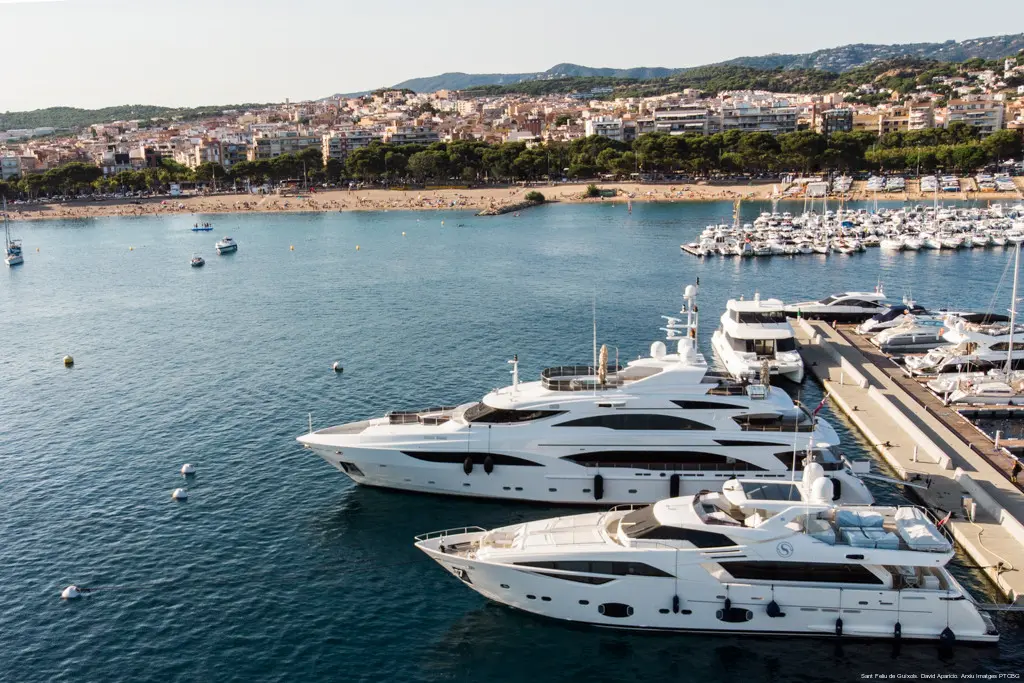
Between Blanes and Portbou the main ports and marinas of the Costa Brava range from 61 berths at Aiguablava to 5,000 in the canals of Empuriabrava, according to the Catalan ports authority. In July and August a 12-metre boat pays about €115 a night at Marina Port d'Aro in 2026, and about €30 in the ports run directly by the Generalitat. Since 2 April 2026 anchoring on seagrass is banned all along the Spanish Mediterranean, so in many coves you pick up a buoy instead.
Picture a family from Lyon with a 12-metre motor boat and a house they want to use from May to October. On the Costa Brava the first decision is where the boat will sleep: a marina berth in town, a mooring at the end of the garden in the canals of Empuriabrava, or a small port with a short waiting list. Each choice points to a different kind of house.
Below are the ports from south to north with their size and the longest boat they take, what a berth costs in 2026, the coves worth reaching by sea, the rules that changed this year and three ways to live with a boat.
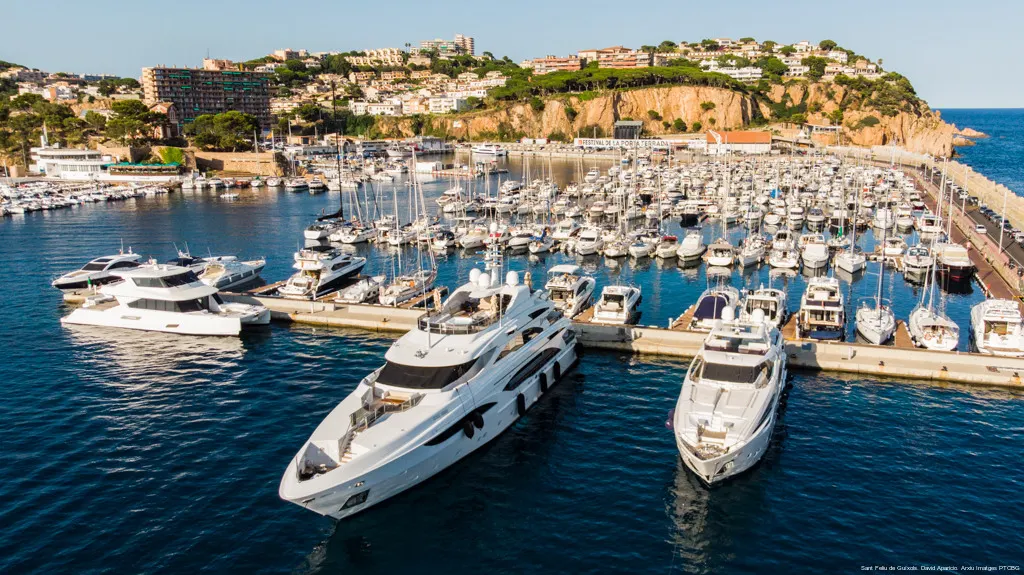
Marinas on the Costa Brava, from Blanes to Portbou
The figures come from the pages of Ports de la Generalitat, the Catalan ports authority. Some ports it runs itself; others are run by a club or a company under a concession. Where its pages in different languages give different numbers, we show both: ask the marina before you plan around them.
| Port | Town | Berths | Boat length |
|---|---|---|---|
| Port de Blanes | Blanes | 717 | 6 to 15 m |
| Cala Canyelles | Lloret de Mar | 134 | up to 8 m |
| Port de Sant Feliu de Guíxols | Sant Feliu de Guíxols | 847 | ask the port |
| Marina Port d'Aro | Castell-Platja d'Aro | 558 or 822 (pages differ) | 6 to 25 m |
| Port de Palamós | Palamós | 808 | 6 to 20 m |
| Marina Palamós | Palamós | 902 | 7 to 30 m |
| Port de Llafranc | Palafrugell | 140 | ask the port |
| Port d'Aiguablava | Begur | 61 | up to 6 m, May to September |
| Port de l'Estartit | Torroella de Montgrí | 918 | 6 to 20 m |
| Port de l'Escala | L'Escala | 1,289 | 6 to 20 m |
| Marina d'Empuriabrava | Castelló d'Empúries | 5,000 | 4 to 25 m |
| Canals de Santa Margarida | Roses | 1,598 | up to 20 m |
| Port de Roses | Roses | 561 or 487 (sources differ) | 6 to 20 m |
| El Port de la Selva | El Port de la Selva | 870 | up to 12 or 15 m (pages differ) |
| Port de Llançà | Llançà | 550 | up to 12 or 15 m (pages differ) |
| Port de Colera | Colera | 150 | 3 to 13 m |
| Port de Portbou | Portbou | 297 | 5 to 20 m |
The south: Blanes to Palamós
Blanes has the first big port of the Costa Brava, with 717 berths. Lloret de Mar has no marina in town, but it does have a small port at Cala Canyelles, with 134 berths for boats up to 8 metres and a 4-tonne crane: enough for a day boat, not for a yacht. Sant Feliu de Guíxols has 847 berths in the old fishing town, and Marina Port d'Aro in Platja d'Aro takes boats up to 25 metres and has fuel and a 25-tonne travel lift.
Palamós has two marinas side by side. The leisure basin in the main port has 808 berths. Marina Palamós, with 902 berths, takes boats up to 30 metres, the longest boat length listed by the ports authority for this coast. It has a 24-hour fuel dock, a 45-tonne travel lift and dry storage for 142 boats.
The middle: Llafranc to L'Escala
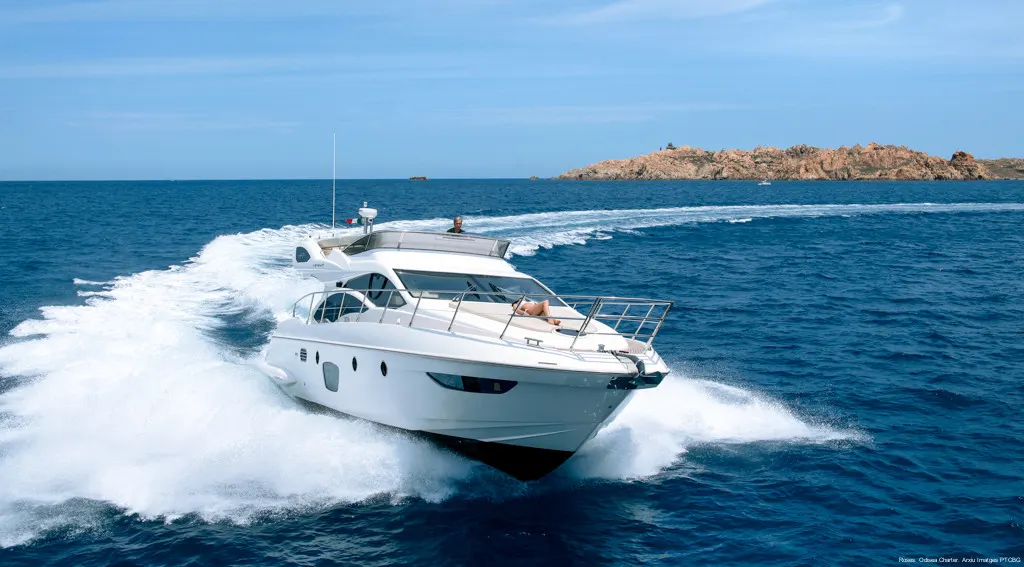
Around Palafrugell and Begur the coast breaks up into small coves, and the ports are small too. Llafranc has 140 berths and fuel. Aiguablava has 61 berths for boats up to 6 metres and opens from May to September. L'Estartit, with 918 berths, is the port for the Medes Islands marine reserve. L'Escala is the largest of the ports run directly by the Generalitat on this coast, with 1,289 berths, including 313 for small boats up to 7 metres.
The north: the Bay of Roses to the French border
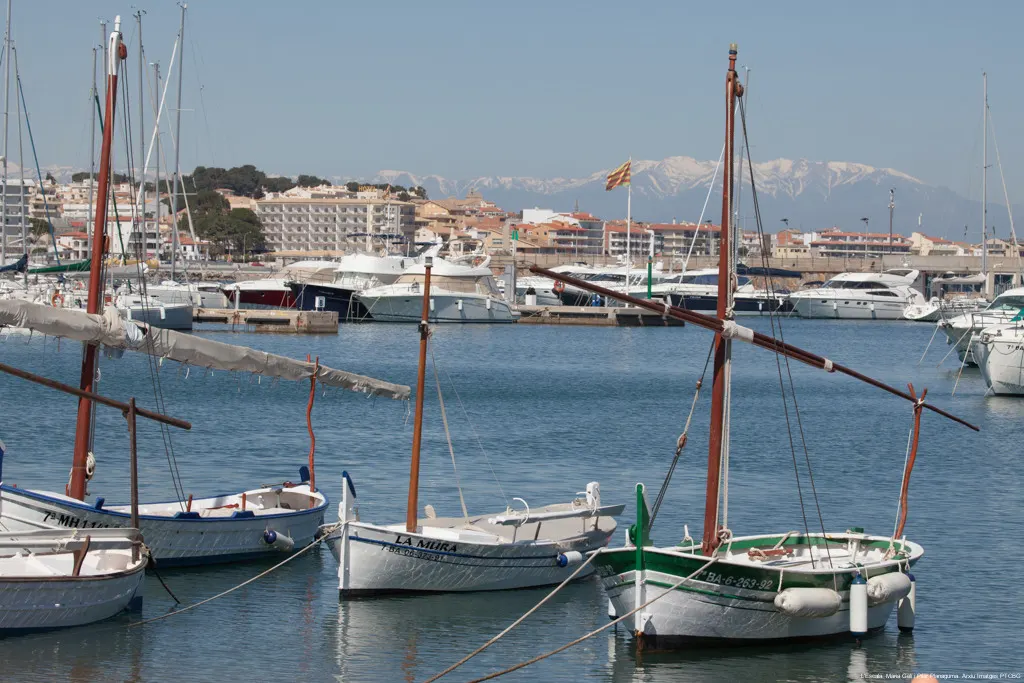
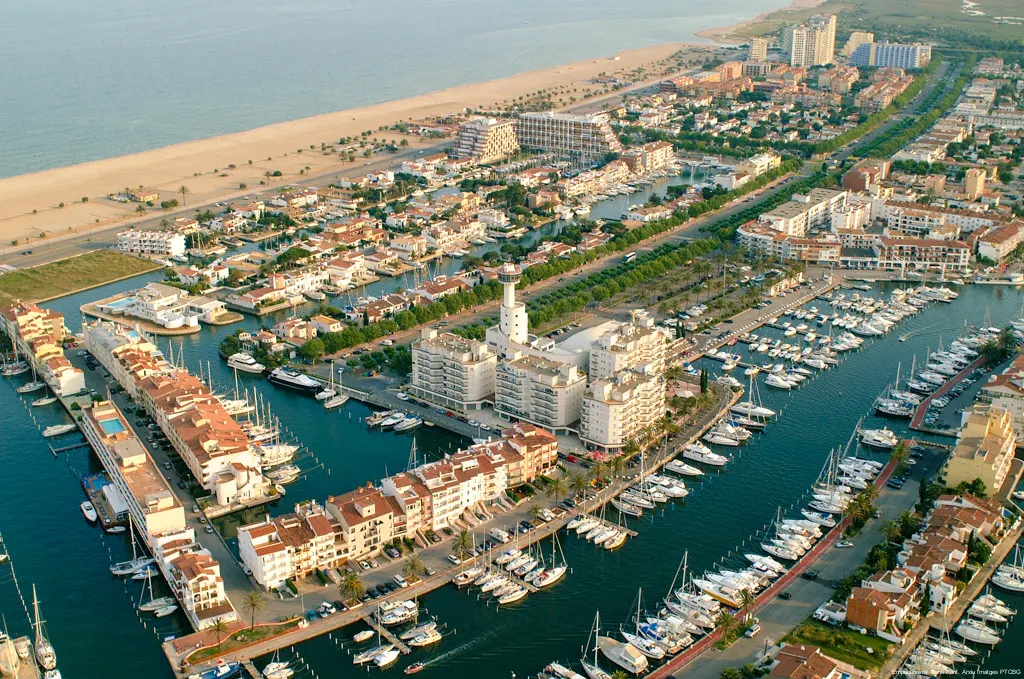
Empuriabrava is a different kind of place: a town built around canals, with 5,000 berths and 23 km of navigable water, according to the ports authority. The town's own tourist website calls it the largest residential marina in Europe. No official ranking confirms it. Nearby in Roses, the canals of Santa Margarida have 1,598 berths for boats up to 20 metres, and the Port de Roses faces the bay.
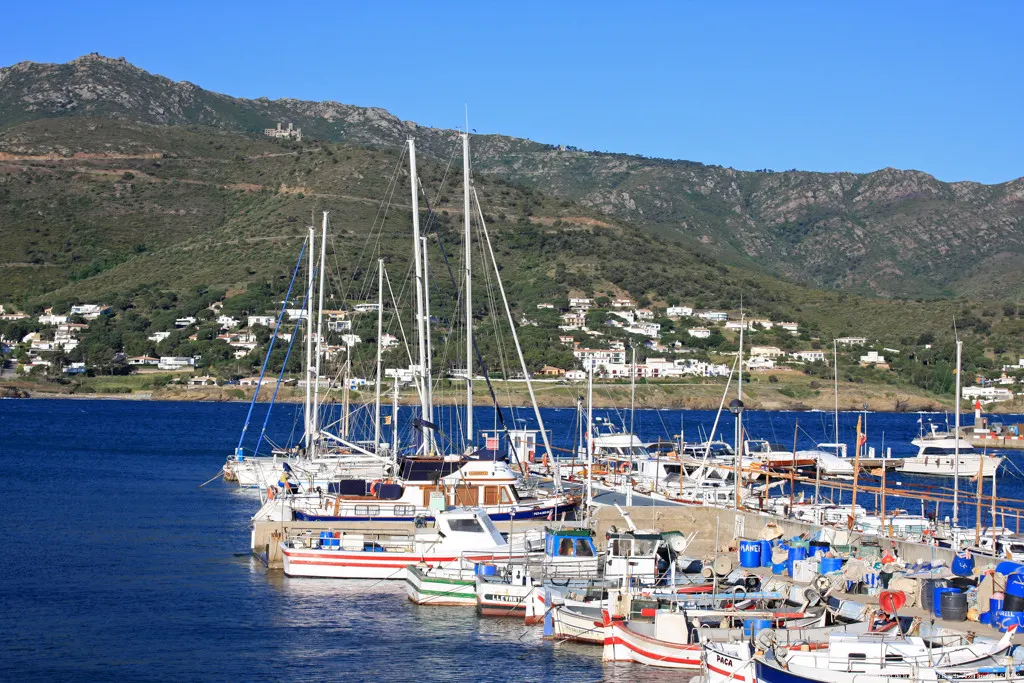
Past Cap de Creus the ports get smaller and the mountains come down to the sea: El Port de la Selva with 870 berths, Llançà with 550, Colera with 150 and Portbou with 297, the last port before France. Cadaqués has no marina. In summer the private operator SP Cadaqués runs more than 200 moorings in the bay from 1 June to 15 September, and the natural park has a seasonal buoy field at Portlligat.
What a berth costs in 2026
Marinas publish their own prices. The ports run directly by the Generalitat charge a public fee set by law, the same all year, so in summer they are much cheaper. The catch is availability, so ask the port early.
| Where | 12 m boat, per night, July and August | 15 m boat, per night, July and August |
|---|---|---|
| Marina Port d'Aro (2026) | €115.31 (12 x 4 m) | €180.17 (15 x 5 m) |
| Marina Palamós (2027 rates) | €116.53 | €186.43 |
| Ports run directly by the Generalitat | about €30 | about €47 |
For a whole year, Marina Port d'Aro asks €10,610 for a 12 x 4 m berth and €16,579 for 15 x 5 m in 2026, plus the port tax for larger boats. Marina Palamós includes that tax, water and electricity in its prices. The Generalitat fee is €0.625 per square metre of berth per day, with water and electricity charged on top.
Some marinas also sell the right to use a berth for the years left on their concession. Port d'Aro says its last berths of 8 to 25 metres are for sale, under a new concession running to 2041, but doesn't publish prices.
Coves worth reaching by boat
The tourist board and the natural parks list these among the coves best reached from the sea. In several of them you can't drop anchor at all.
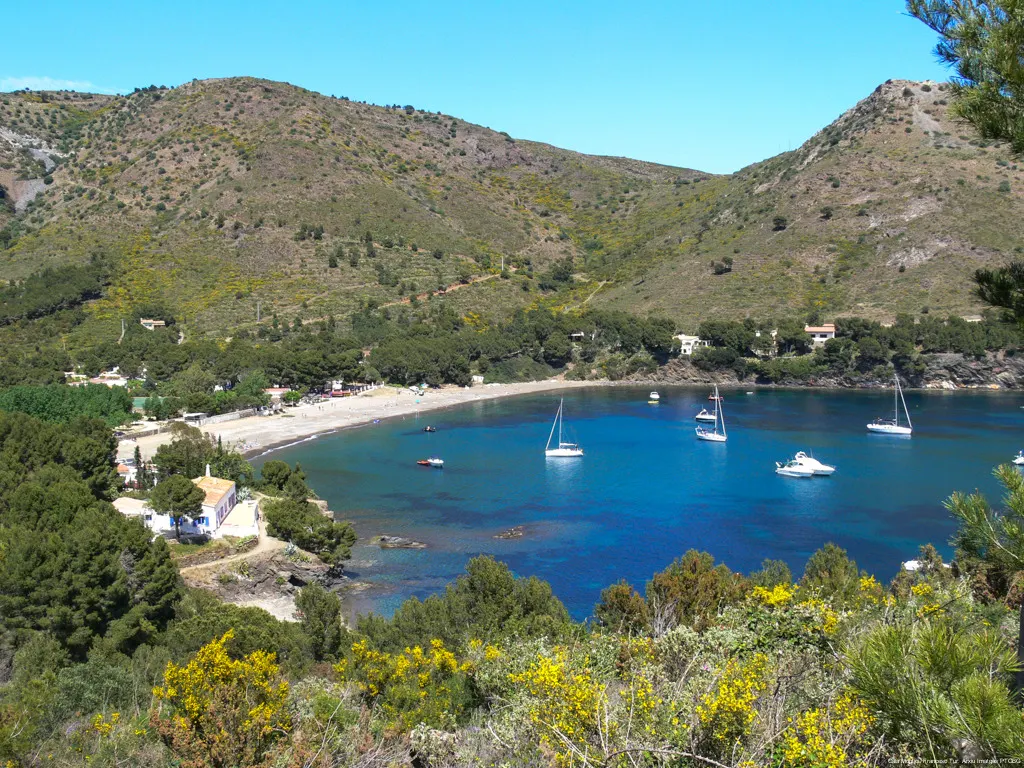
- Cala Montjoi, Roses. Deep water close to the shore, so boats get near the beach. There is a buoy field, and you can't anchor inside it. From 1 July to 31 August cars can't drive down between 9:30 and 16:00, which makes arriving by sea the easy way in.
- Cala Jugadora, Cadaqués. Two small beaches near the Cap de Creus lighthouse. The natural park bans anchoring here.
- Cala Pedrosa, Tamariu. Easier by boat than by land, according to the tourist board.
- Cala Estreta, Palamós. Reached by sea or on foot, in the protected area between Castell and Cap Roig, with a 16th-century fishermen's hut.
- Cala Montgó, L'Escala. Sheltered from the tramuntana, with a buoy field from 1 June to 30 September.
- Aiguablava, Begur. A sheltered bay where many boats stop. The local sailing club rents buoys for boats up to 9 metres: €60 for four to five hours, €110 for a day.
The rules that changed in 2026
No anchoring on seagrass. Since 2 April 2026 a royal decree (Real Decreto 191/2026) bans anchoring on Posidonia and Cymodocea meadows all along the Spanish Mediterranean, or so close to them that the chain drags across them as the boat swings. The Generalitat publishes a map of the meadows (sig.gencat.cat).
Cap de Creus. In the natural park the speed limit is 12 knots, 5 knots within 300 metres of the shore and 3 within 50 metres. You can't anchor inside the buoy fields at Montjoi, La Pelosa, Jòncols and Portlligat, or in Cala Murtra, Jugadora and Galladera, and outside the partial reserves you can spend at most two nights in a row at anchor. Jet skis are banned.
The Medes Islands. Off L'Estartit you can only moor to the reserve's buoys: €8.10 for a stop with a boat up to 9 metres and €12.15 for one of 9 to 16 metres, paid to the park boat on the spot. Diving needs a separate permit.
Palafrugell. The town's day buoy fields are free for boats up to 8 metres, for up to three hours.
Who can skipper a boat in Spain
On a Spanish-flagged boat, including a rented one, the harbour master's office (Capitanía Marítima) can authorise citizens of the European Economic Area to skipper with their own national licence, and also holders of the licences listed by Spanish law, which include British RYA and Swiss certificates (Real Decreto 875/2014). Ask the Capitanía how to apply in your case. For a boat under a foreign flag, ask the Capitanía.
From 1 October 2026 a new decree (Real Decreto 1188/2025) changed the rules for boats without a licence. You can still take out your own motor boat up to 5 metres and 15 horsepower, or a sailing boat up to 6 metres, by day and within 2 miles of the coast. Renting a boat without a licence is no longer possible, whatever its length. Without a licence, you rent with a skipper.
When to go out, and the tramuntana
The tramuntana is the north wind of the Empordà. The Catalan weather service defines it by direction, and an article on the blog of AEMET, the Spanish weather agency, describes it as dry, cold, strong and steady, more frequent in winter, spring and autumn and rare in summer. The same article notes that days of tramuntana have fallen sharply since 2014. For a boat owner it decides two things: which coves stay calm (Cala Montgó is one of the sheltered ones) and which days you stay in port.
The sea stays warm well into autumn. Meteocat has measured the water off L'Estartit since 1974, and its 1998 to 2022 average for early October is 19.8 °C at the surface.
Living with a boat: three options
A house on the canals. In Empuriabrava many houses have their own mooring in front of the garden. Under the marina's operating rules (approved in 2010), that mooring is linked to the plot and reserved for the owner, and it can't be sold separately. It is a right of use, not ownership, and it can't outlast the marina's concession, which runs to 2030. Owners pay maintenance fees based on the size of their berth. If the mooring pushes up the price of the house, ask a lawyer first what happens to it after 2030.
A house above a cove, with the marina in town. In Sant Feliu de Guíxols we are selling Casa Port Salvi, a six-bedroom villa three minutes' walk from the water, and just along the coast Villa Rosamar above Cala Canyet. In Tamariu, close to Llafranc, there are the villas at Sa Xelida, from €2,200,000. Between Platja d'Aro and Sant Antoni de Calonge is our new sea-view apartment in Treumal.
A small boat and a small port. If your boat is under 8 metres, Cala Canyelles in Lloret de Mar is a realistic base. In the same area we have Casa Magnolia, a villa with a pool and garden, and a villa with a tourist licence. On the Bay of Roses, with Santa Margarida and the Port de Roses nearby, there is our villa with views over the bay.
To compare towns before you compare houses, see our Costa Brava price per m² by town and the towns that stay alive all year. If you also play golf, our guide to the golf courses of Girona shows which ones are a short drive from Platja d'Aro and Pals.
Three checks before you buy with a boat in mind
Ask the marina, not the seller, about the berth. Is there a waiting list for an annual berth of your length? Until when does the concession run?
Measure the boat against the port. Length, beam and, on the canals, the height of the bridges. A sailing boat that fits one marina may not fit the next one up the coast.
Add up the year, not the night. Annual berth, port tax, insurance and maintenance come on top of the house. Put them next to the purchase costs in our purchase tax guide with a calculator.
Questions people ask
How much does a berth cost on the Costa Brava?
In July and August a 12-metre boat pays €115.31 a night at Marina Port d'Aro (2026 rates) and €116.53 at Marina Palamós (2027 rates). In the ports run directly by the Generalitat the public fee is €0.625 per square metre a day, about €30 for a 12 x 4 m boat. An annual 12 x 4 m berth at Port d'Aro costs €10,610 in 2026.
Which marina on the Costa Brava takes the biggest yachts?
Marina Palamós, for boats up to 30 metres, according to Ports de la Generalitat. Marina Port d'Aro and Empuriabrava take boats up to 25 metres.
Can you anchor anywhere on the Costa Brava?
No. Since 2 April 2026 anchoring on Posidonia seagrass is banned all along the Spanish Mediterranean (Real Decreto 191/2026). At Cap de Creus and the Medes Islands there are further limits, and many coves have buoy fields where you pick up a buoy instead of anchoring.
Do you need a licence to rent a boat in Spain?
Since 1 October 2026, yes, whatever the length of the boat (Real Decreto 1188/2025). Without a licence you can rent a boat with a skipper. On Spanish-flagged boats the Capitanía Marítima can authorise holders of EEA licences and some others, including British RYA and Swiss ones.
Can you buy a house with a private mooring on the Costa Brava?
In Empuriabrava many houses on the canals have a mooring in front of the garden, but it is a right of use linked to the house, not ownership, and it lasts as long as the marina's concession, currently until 2030. Check the legal status with a lawyer in Spain.
Looking for a home near the water?
Tell us which stretch of coast you like, what kind of home you're looking for and your budget. We'll put together a shortlist and show you the ones that interest you, in person or by video call.
 Author: @katy.bon.estate, property consultant on the Costa Brava
Sources: Ports de la Generalitat, port pages and fees (ports.gencat.cat, 2024 to 2026); Club Nàutic Port d'Aro, 2026 rates; Marina Palamós, 2027 rates; Real Decreto 191/2026 (BOE, 13 March 2026); Parc Natural del Cap de Creus, rules for boats; Generalitat de Catalunya, Medes Islands marine reserve; Ajuntament de Palafrugell, day buoy fields; Club Nàutic Aiguablava; Patronat de Turisme Costa Brava Girona, coves; Real Decreto 875/2014 and Real Decreto 1188/2025, Ministerio de Transportes; Marina d'Empuriabrava operating rules (2010); Meteocat; AEMET blog. Photos: Arxiu d'Imatges del Patronat de Turisme Costa Brava Girona. Cover: Sant Feliu de Guíxols. Photo: David Aparicio. Arxiu d'Imatges PTCBG, 84565. Information as of November 2026.