
Blog
Buy a Flat in Spain by the Sea: Costa Brava Averages from €2,442 per m² (2026)
· 11 November 2026
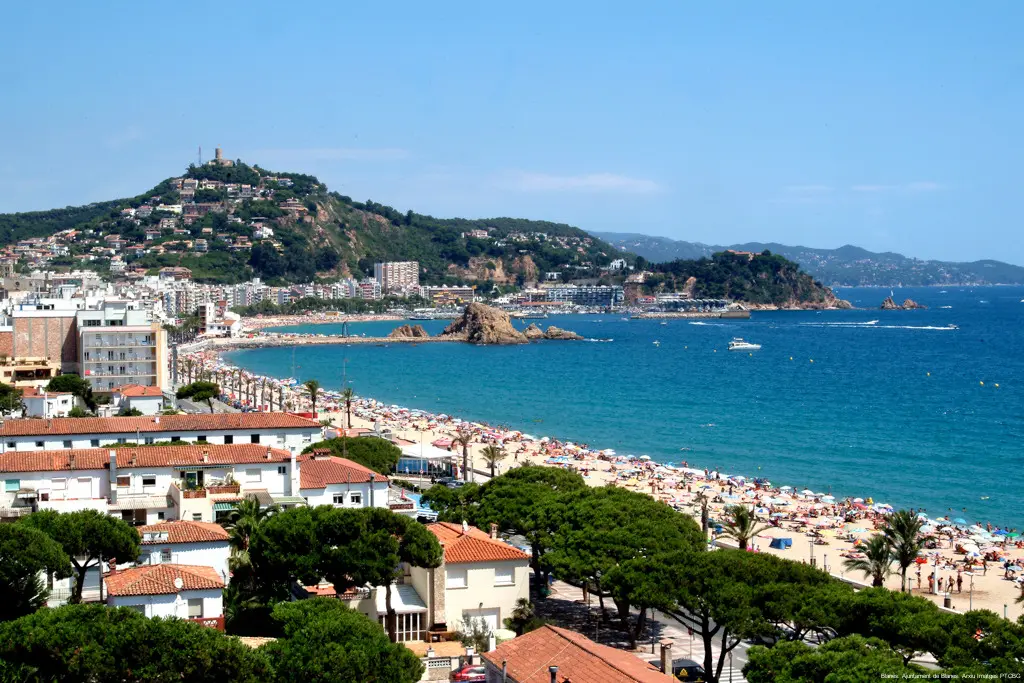
To buy a flat in Spain by the sea on the Costa Brava, budget by town first: in sales registered between April and June 2026 (all homes, flats and houses together), the average price was €2,442 per m² in Lloret de Mar and €2,521 in Blanes, rising to €4,863 in Castell-Platja d'Aro and €7,365 in Cadaqués (15 sales). On top of the price, a resale flat carries 10% transfer tax up to €600,000, and a new flat from a developer 10% VAT plus 1.5% stamp duty. Before you sign, check four things the price doesn't show: where the coastal-law boundary runs, the community of owners' accounts, the tourist-rental rules and the documents the seller must hand over.
Take the average home sold in Lloret de Mar in the second quarter of 2026: 95 m² built, about €195,000. If it's a resale, the buyer pays 10% transfer tax, about €19,500, plus notary, Land Registry and legal fees. If the building's community approved a new roof the month before, part of that bill may land on the new owner too. And if the plan was to let it to tourists, Lloret is one of the towns where a tourist flat now needs a prior urban-planning licence.
None of this makes a flat by the sea a bad buy. It means the price per m² is only the starting point. Below: prices by coastal town, what first line and sea views mean in practice, the coastal law, the community of owners, tourist rental, taxes and the papers to check. Our own listings are mainly in Lloret de Mar and Blanes, so we use them as examples.
What a flat by the sea costs on the Costa Brava: prices by town
The Generalitat de Catalunya publishes, every quarter, the average price of homes sold in each town, using Land Registry data. The figures below are for April to June 2026, the latest quarter out in November. They cover all homes, flats and houses together, new and resale: the official statistics don't separate flats. Next to them is what sellers were asking on idealista in September 2026.
| Town | Paid, €/m² | Average size | Average price | Sales | Asking, €/m² |
|---|---|---|---|---|---|
| Blanes | 2,521 | 83 m² | €196,000 | 136 | 2,512 |
| Lloret de Mar | 2,442 | 95 m² | €195,000 | 184 | 2,698 |
| Tossa de Mar | 3,386 | 72 m² | €240,000 | 69 | 3,554 |
| Sant Feliu de Guíxols | 2,678 | 100 m² | €235,000 | 96 | 3,315 |
| Castell-Platja d'Aro | 4,863 | 99 m² | €466,000 | 152 | 4,026 |
| Calonge i Sant Antoni | 3,842 | 108 m² | €371,000 | 101 | 3,367 |
| Palamós | 3,127 | 85 m² | €239,000 | 86 | 3,508 |
| Palafrugell | 3,012 | 110 m² | €379,000 | 132 | 3,259 |
| L'Escala | 2,907 | 88 m² | €235,000 | 114 | 3,219 |
| Roses | 3,427 | 68 m² | €222,000 | 213 | 3,494 |
Two notes on reading it. The average price and the average price per m² are worked out separately, so multiplying size by price per m² won't give the average price exactly. And new builds can pull a town up: in Castell-Platja d'Aro, 64 new homes sold at €6,213 per m² in the quarter, while resales came to €3,801. The full table for 18 towns, with a longer explanation of the two sources, is in our article Costa Brava price per m² by town.
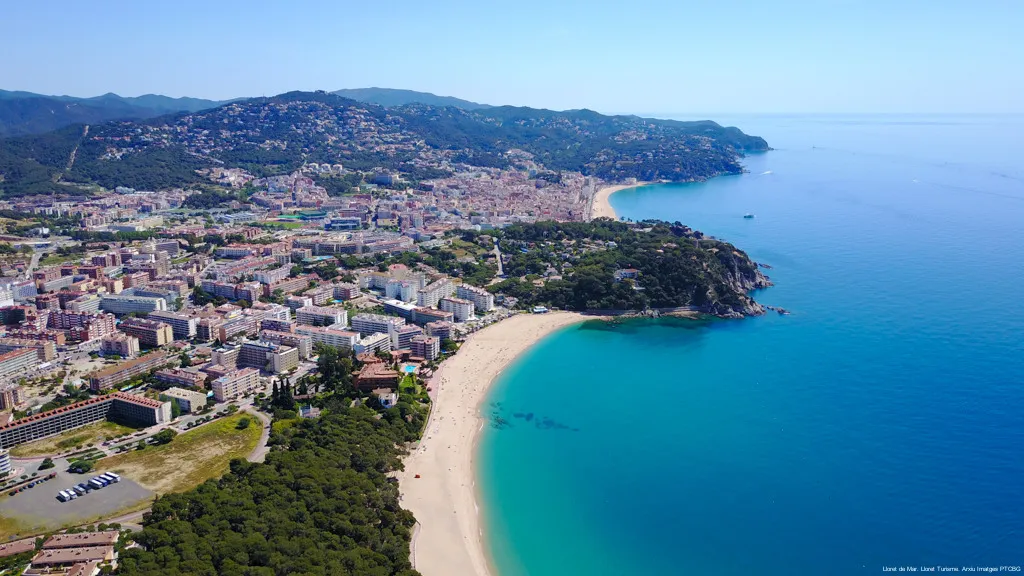
First line, second line and sea views
First line. Agents and portals use "first line" (primera línea) for a building with nothing between it and the beach or the seafront promenade. Second line means one street back. It's a market term, not a legal one, so ask what exactly stands between the flat and the water.
How much more first line costs. We don't know of any official statistics that separate first-line prices from the rest of a town: the Registry figures above mix all homes. The only reliable way to judge a premium is to compare recent sales in the same building or on the same stretch of promenade, which is what we do before an offer.
Sea view. A view is not a right you buy with the flat. Ask what the town plan allows on the plot in front, and look at the view from the flat itself, at its own height, not from the roof terrace in the photos.
Noise and season. On a promenade in Lloret or Blanes, summer evenings are busy and winter is quiet. Visit at both times if you can, or at least ask the neighbours.
The coastal law (Ley de Costas): what it means for a seafront flat
Spain's coastal law, the Ley de Costas of 1988 as amended in 2013, splits the shore into strips. For a flat buyer, three of them matter.
- Public coastal land (dominio público marítimo-terrestre). The beach and the shore belong to the State and cannot be privately owned. A building that stands on it is held under a concession, and the law says it is demolished when the concession ends. Since 2013 these concessions can be extended for up to 75 years from the date of the application.
- Protection strip (servidumbre de protección). 100 m inland from the inner edge of the shore, or 20 m where the land was already urban when the law came into force in 1988. New residential buildings are not allowed in it. Existing buildings that were legal before the law can be repaired, improved and modernised, but not enlarged in volume, height or floor area. If the building is demolished, whatever replaces it must comply with the law in full.
- Right of way (servidumbre de tránsito). The first 6 m of the protection strip stay open for people walking along the coast.
In practice: an older block on the seafront promenade of a town like Lloret or Blanes may sit inside the protection strip. That doesn't stop you buying, selling or renovating the inside, but it limits what the community can add (an extra floor, a bigger terrace). The Land Registry receives the official coastal line from the Ministry, and the registrar must suspend the registration of a property that overlaps public coastal land and ask the coastal authority. You can look at the line yourself on the Ministry's viewer or the Catastro website, though both say the data is for information only. In Catalonia, authorisations for works in the protection strip are issued by the Generalitat.
The community of owners: fees, levies and debts
Every block of flats has a community of owners (comunidad de propietarios). In Catalonia it runs under the Catalan Civil Code, not the Spanish law on horizontal property that applies elsewhere in Spain, and some rules differ.
Debts stay with the flat. The flat itself is liable for unpaid community fees of the current year and the four years before, including debts left by previous owners. So before the deed, the seller must declare that the fees are paid and hand over a certificate from the community secretary. The deed can't be signed without it unless both parties expressly waive it, and we'd advise you never to waive it.
Levies already voted. The same certificate must list ordinary and extraordinary payments that the community has approved but that are not yet due. Catalan law doesn't say who pays a levy (derrama) voted before the sale and charged after it, so agree it in the contract: for example, a price adjustment or a payment by the seller.
Reserve fund. The community's budget must set aside at least 5% of common costs for a reserve fund. It belongs to the building and is not refunded when you sell.
What to ask for. The current budget, the monthly fee for this flat, the minutes of the last two or three general meetings and any building inspection report. On a seafront block, ask in particular about the façade and balconies, which take salt and wind all year. The minutes show whether works are planned.
Tourist rental: what the rules allow in Catalonia
In Catalonia a flat let for stays of 31 days or less counts as a tourist-use dwelling (HUT) and needs to be registered as one. Since the Catalan decree-law 3/2023, 262 towns, Lloret de Mar and Blanes among them, require a prior urban-planning licence for each tourist flat, with a ceiling of 10 tourist flats per 100 residents. Licences last five years and can be renewed. The Constitutional Court upheld the decree in March 2025.
The community can also limit activities in the flats, including tourist letting, by changing its statutes. In Catalonia that takes four fifths of the owners holding four fifths of the shares; owners who don't attend and don't object in writing within a month count towards the majority. The 3/5 rule you may read about applies in the rest of Spain, not here.
If the plan is to let, check three things before the offer: whether the flat already has a registered tourist licence, what the community statutes say, and whether a longer let would work for you. Renting to someone as their home needs no tourist licence. Where licences are still available is covered in our article tourist licence on the Costa Brava.
Taxes when you buy a flat in Spain: resale or new build
The tax depends on who sells. A private seller means transfer tax (ITP), paid by the buyer within a month on form 600. In Catalonia it is 10% up to €600,000, 11% from €600,000 to €900,000, 12% up to €1,500,000 and 13% above, each rate only on the part of the price inside its band. The base is the higher of the price and the Catastro reference value. A developer selling a new flat charges 10% VAT, plus 1.5% stamp duty (AJD).
| Price | Resale (ITP) | New build (VAT 10% + AJD 1.5%) |
|---|---|---|
| €195,000 | €19,500 | €22,425 |
| €250,000 | €25,000 | €28,750 |
| €700,000 | €71,000 | €80,500 |
In Catalonia the buyer also pays the notary for the deed and the first copy unless agreed otherwise, plus the Land Registry and usually a lawyer. The seller pays the municipal capital gains tax (plusvalía). If the seller is not resident in Spain, the buyer withholds 3% of the price and pays it to the tax office within a month. Figures for notary, registry and other extras are in our article on hidden costs when buying property in Spain, and our purchase tax calculator for Catalonia gives the tax for any price.
Documents to check before you buy a flat
- Nota simple. The Land Registry extract: owner, size, mortgages and charges. It costs €9.02 plus VAT online. How to read it: our guide to the nota simple.
- Cèdula d'habitabilitat. Catalonia's certificate that the flat is fit to live in. The notary asks for a valid one and it is handed to the buyer. For a resale it lasts 15 years; a new build gets a first-occupation cèdula valid for 25. The parties can do without it only in narrow cases, such as a flat that will be renovated, with a technician's report, and never for a new build.
- Energy certificate. Required for every sale, valid up to 10 years (5 if rated G). The rating must appear in the advert and a copy goes with the contract.
- IBI receipt. The annual property tax falls on whoever owns the flat on 1 January, and unpaid IBI from earlier years stays attached to the flat. Ask for the latest receipt and agree in the contract how this year's bill is shared.
- Community certificate. No debts, plus any levies already approved (see above).
- Catastro and the plans. Compare the built area in the Catastro, the Registry and the listing. If a terrace has been closed in, ask whether it was done with a permit.
The steps, in order
Get an NIE, the foreigner's identification number, also used for tax (the fee is €9.84), and a Spanish bank account. Make the offer. Your lawyer checks the nota simple, the community, the cèdula and the urban-planning status before any money changes hands. Then comes a private contract with a deposit (arras), then the deed at the notary, where you pay the rest. The lawyer or the gestor files the transfer tax within a month and registers the flat in your name.
Our view
For a flat by the sea, we'd spend as much time on the building as on the flat. Two flats at the same price per m² in the same street can differ by tens of thousands of euros once you add a façade levy, a missing cèdula or a community that has already voted against tourist lets. Ask for the papers early, and if a seller won't share the minutes of the last meetings, treat that as a warning sign.
Three practical rules
1. Price the town, then the building. Start from the registered price per m² in the town, then compare with recent sales in the same block or street. A first-line premium should be visible in real sales, not just in the listing.
2. Check the community before the flat. Certificate of debts, budget, minutes of the last meetings and statutes. They tell you the monthly cost, the levies coming and whether tourist letting is limited.
3. Check the coastal line and the cèdula before the deposit. Once you've signed arras, walking away usually costs the deposit. The nota simple, the coastal viewer and the cèdula take a few days to check.
Questions people ask
How do I buy a flat in Spain by the sea?
Get an NIE and a Spanish bank account, choose a town, make an offer, and have a lawyer check the Land Registry extract (nota simple), the community of owners, the habitability certificate and the coastal law position before you sign a deposit contract. The sale is completed with a deed before a notary, and within a month the buyer pays transfer tax on a resale, or stamp duty on a new build (VAT goes to the developer with the price).
How much is a flat by the sea on the Costa Brava in 2026?
In sales registered between April and June 2026, the average price per built m² was €2,442 in Lloret de Mar, €2,521 in Blanes, €3,427 in Roses and €4,863 in Castell-Platja d'Aro (Generalitat de Catalunya, Land Registry data, all homes). The average home sold in Lloret had 95 m² and cost about €195,000.
Can I build or extend a flat on the first line?
Inside the coastal protection strip (100 m from the shore, or 20 m in land that was already urban in 1988), new residential buildings are not allowed, and existing legal ones can be repaired and modernised but not enlarged. Renovating the inside of a flat is allowed; an extra floor or a larger terrace usually is not.
Can I rent out a seafront flat to tourists in Catalonia?
Only with a registered tourist licence. Since decree-law 3/2023, 262 Catalan towns, including Lloret de Mar and Blanes, require a prior urban-planning licence, with a cap of 10 tourist flats per 100 residents, and the community of owners can limit tourist use with a 4/5 vote. Letting the flat as someone's main home needs no tourist licence.
Who pays the community debts when I buy a flat in Catalonia?
The seller owes them, but the flat itself is liable for unpaid fees of the current year and the previous four, so a buyer can end up paying. That is why the seller must provide a certificate from the community secretary before the deed, listing any debts and any levies already approved.
Looking for a flat by the sea on the Costa Brava?
Tell us which town, how many bedrooms, how close to the sea and your budget. We'll put together a shortlist of flats, with the community accounts and documents checked, and show them to you in person or by video call.
 Author: @katy.bon.estate, property consultant on the Costa Brava
Sources: Generalitat de Catalunya, Department of Territory, Housing and Ecological Transition, registered home sales by municipality, Q2 2026, using data from the Colegio de Registradores; idealista, Girona province asking price report, September 2026; Patronat de Turisme Costa Brava Girona (coastline); Ley 22/1988 de Costas, Ley 2/2013 and Real Decreto 876/2014 (BOE); Llei 8/2020 de protecció i ordenació del litoral; Ministerio para la Transición Ecológica (coastal line viewer); Codi civil de Catalunya, book five, arts. 553-5, 553-6, 553-11 and 553-26; Llei 18/2007 del dret a l'habitatge and Decret 141/2012 (cèdula d'habitabilitat); Real Decreto 390/2021 (energy certificate); Real Decreto Legislativo 2/2004 and Ley 58/2003 (IBI); Colegio de Registradores (nota simple price); Decret 75/2020 and Decret llei 3/2023 (tourist dwellings), Constitutional Court judgment 64/2025; Agència Tributària de Catalunya (ITP and AJD); Ley 37/1992 (VAT); Agencia Tributaria (3% withholding); Policía Nacional (NIE fee). Cover: Blanes. Photo: Ajuntament de Blanes. Arxiu d'Imatges PTCBG, 19132. Information as of 11 November 2026. This is general information, not legal or tax advice: check your case with a lawyer in Spain.