
Blog
Retire to Spain in 2026: Visa, Pension Tax and Healthcare on the Costa Brava
· 11 November 2026
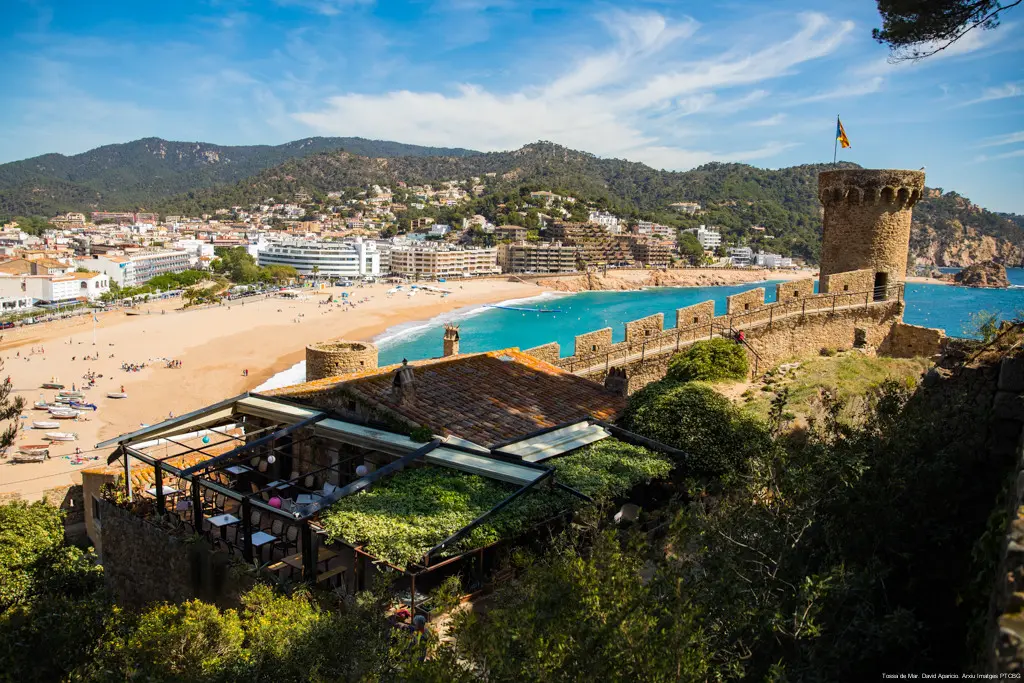
To retire to Spain in 2026, a British pensioner needs a residence visa, usually the non-lucrative visa, which asks for €28,800 a year in income for one person and €7,200 more for a partner. EU citizens only need to register, for a €12 fee. Once you live here more than 183 days a year you become a Spanish tax resident: under the UK-Spain treaty your UK State Pension and private pensions are taxed in Spain, while a UK government service pension stays taxed in the UK.
Take a British couple, both 67, as an example. She retired from the civil service and receives a civil service pension plus the UK State Pension. He has the State Pension and a private workplace pension. They want to spend the whole year on the Costa Brava, not just the summer.
Since Brexit they are third-country nationals, so they need a visa before they move: together they must show at least €36,000 a year (€28,800 for the main applicant, €7,200 for the spouse). Once they are Spanish tax residents, Spain taxes both State Pensions and his private pension. Her civil service pension is taxed only in the UK, but Spain still counts it when it sets the tax rate on the rest of their income.
Below is the full picture for 2026: residence, healthcare, the UK-Spain tax treaty, Spanish income and wealth tax, six towns compared, and the pitfalls we see most often. This is general information, not legal or tax advice.
Residence: EU citizens and British retirees
EU and EEA citizens. You can live in Spain freely. If you stay longer than three months, you register in person within three months of arrival and receive the EU registration certificate (form EX-18, fee paid on form 790, code 012, €12 in 2026). A retiree shows health cover, usually the S1 form from the country that pays the pension, and sufficient resources. As a guide, resources count as sufficient above the annual non-contributory pension, €8,803.20 in 2026, but the office looks at each case. After five years of legal, continuous residence you have the right to permanent residence.
British citizens after Brexit. Without a visa you can stay in the Schengen area up to 90 days in any 180-day period. To live here longer, you need a visa or residence permit, and retiring is one of the recognised purposes. People who lived legally in Spain before 1 January 2021 keep their rights under the Withdrawal Agreement; their document is the TIE or an older green EU certificate, and the authorities recommend swapping the old certificate for the TIE.
The non-lucrative visa. It asks for 400% of IPREM a month for the main applicant and 100% for each family member. With IPREM at €600 a month in 2026, that is €2,400 a month (€28,800 a year) plus €600 a month (€7,200 a year) per family member. You may not work, and you need health insurance with an insurer authorised in Spain that covers what the public system covers. Each consulate sets its own details on insurance: the Spanish consulate in London, for example, also accepts a registered S1. We cover the steps in our guide to the non-lucrative visa.
Healthcare for retirees in Spain
The S1 form. If you receive the UK State Pension and live in Spain, the UK can pay for your Spanish public healthcare through an S1. You ask NHS Overseas Healthcare Services for it, then register it with the Spanish Social Security (INSS). EU pensioners do the same with the S1 from the country that pays their pension.
The health card in Catalonia. To get the TSI health card you must be on the padrón, the municipal register, of a Catalan town. You then apply online or at your local health centre (CAP).
Without an S1. A retiree who has no S1 needs private insurance at first. After one year of residence you can pay to join the public system through the convenio especial: €60 a month under 65 and €157 a month from 65. It is not open to people who already have public cover, S1 holders included. The European Health Insurance Card covers temporary stays only and stops being the right document once you live here.
Many retirees keep a private policy on top of public cover. Prices, waiting periods and age limits are in our guide to health insurance in Spain for foreigners.
Your UK State Pension in Spain
If you live in Spain, your UK State Pension goes up every year, as it does in the UK. Spain is in the EEA, so the freeze that applies in some other countries does not apply here. You can have it paid into a Spanish account or a UK one; payments abroad carry a 0.39% conversion charge.
Retiring in Spain and taxes: when you become a tax resident
Spanish law treats you as a tax resident if you spend more than 183 days in Spain in a calendar year, counting short trips away unless you prove residence elsewhere, or if your main economic interests are here. If your spouse and minor children live here, Spain presumes you live here too. A resident is taxed on worldwide income, and pensions are taxed as employment income.
If the UK also treats you as resident, the treaty decides in this order: where you have a permanent home, then where your personal and economic ties are closer, then where you usually live, then nationality.
Which country taxes your pension
The UK-Spain treaty has been in force since 12 June 2014. The type of pension matters more than where the money is paid.
| Pension | Where it is taxed | What to do |
|---|---|---|
| UK State Pension | Only in Spain (article 17) | Declare it in your Spanish return |
| Private and workplace pensions | Only in Spain (article 17) | Ask HMRC to stop UK tax at source with form DT-Individual Spain |
| Pension for UK government service, paid by the State or a local authority | Only in the UK, unless you are resident and a national of Spain (article 18) | Spain exempts it but counts it to set the rate on your other income (article 22) |
Form DT-Individual Spain goes to HMRC with a certificate of tax residence for treaty purposes from the Spanish tax agency. The treaty does not list which jobs count as government service: what matters is who pays the pension and on what basis, so ask your pension payer to confirm the type in writing.
Spanish income tax on pensions
The scale. A resident of Catalonia is taxed on a state scale (9.5% to 24.5%) and a Catalan scale (9.5% to 25.5%) on the same income. Together they start at 19% and reach about 50% above €300,000. Investment income has its own scale, from 19% to 30%.
The personal allowance. The first €5,550 a year is tax-free, €6,700 from 65 and €8,100 from 75. Catalonia uses the same amounts.
Assets abroad. Residents file an information return, modelo 720, when any one category of assets abroad (bank accounts, securities and insurance, property) is worth more than €50,000. The special fines were abolished in 2022 after a ruling of the EU Court of Justice; general penalties still apply to late or missing returns.
Wealth tax in Catalonia. Residents pay it on net assets above €500,000, and the main home is exempt up to €300,000. The rate runs from 0.21% to 3.48%. Above €3 million a state solidarity tax applies, with the Catalan tax deducted from it. Worked examples are in our guide to wealth tax in Catalonia.
Resident or non-resident. If you stay under 183 days and keep your tax home in the UK, Spain taxes only your Spanish income. For a home you keep for your own use, that is a tax on imputed income: 1.1% or 2% of the cadastral value, at 24% for UK residents (19% for EU residents). The details are in our article on property tax for non-residents.
Cost of living on the Costa Brava
Rent, utilities, food and private healthcare are what move a retiree's budget most. We keep the figures for one town, with sources, in our guide to the cost of living in Lloret de Mar.
Best places to retire on the Costa Brava: six towns compared
For a retiree the beach matters less than three things: how far the hospital is, whether you can get to Barcelona without a car, and how alive the town is in January.
| Town | Population | Nearest public hospital with 24-hour A&E | Train to Barcelona | Homes that are no one's main home |
|---|---|---|---|---|
| Lloret de Mar | 41,944 | Hospital de Blanes | No, bus to Blanes station | 40.0% |
| Blanes | 42,446 | Hospital de Blanes | Yes, R1, about 1 h 20 min to Plaça de Catalunya | 36.3% |
| Tossa de Mar | 6,293 | Hospital de Blanes | No, bus to Blanes station | 64.5% |
| Sant Feliu de Guíxols | 23,060 | None in town; urgent care at the health centre; nearest hospital A&E in Palamós | No | 45.0% |
| Palafrugell | 24,556 | Hospital de Palamós | No | 50.9% |
| Begur | 4,286 | Hospital de Palamós | No | 70.6% |
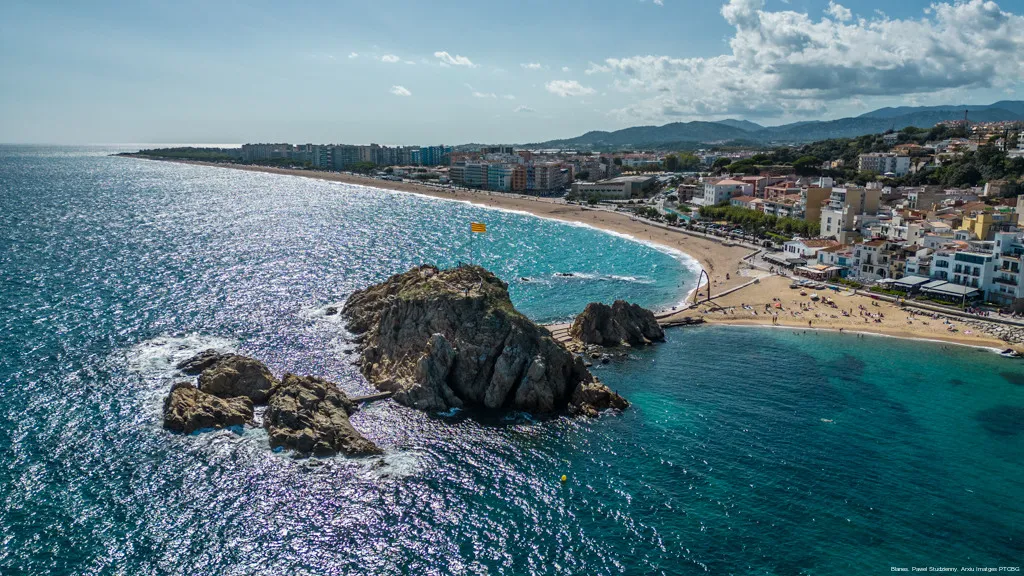
Lloret and Blanes are the two largest towns. Blanes has the hospital and the only railway station on this stretch, though the station is outside the centre. We compare them in detail in Blanes vs Lloret de Mar.
Tossa and Begur are small and beautiful, and most of their homes are no one's main home. Palafrugell is a real market town with its own coves (Calella, Llafranc, Tamariu) and the Palamós hospital nearby. Sant Feliu de Guíxols is a working town with a long seafront; for hospital care you drive to Palamós. For specialist care the whole area relies on the Josep Trueta university hospital in Girona, and Girona station has high-speed trains to Barcelona in about 40 minutes.
Buy or rent first?
Our advice is to rent first, from October to April if you can. Summer shows you the coast at its best; winter shows you whether the bakery, the bus and your neighbours are still there. A town where seven homes in ten are no one's main home, as in Begur, feels very different in February.
When you do buy, a resale home in Catalonia carries a transfer tax of 10% to 13%, depending on the price. Our purchase tax calculator shows the full cost before you make an offer.
Pitfalls of retiring to Spain: the honest list
Catalan. Catalan and Spanish are both official, and Catalan is the main language of local government and schools. You will manage in Spanish, but letters from the town hall often arrive in Catalan, and learning some helps with neighbours.
Quiet winters. In Tossa, Palafrugell and Begur more than half of all homes are no one's main home. In our experience many restaurants and shops there close for the winter. If you need people around you, choose a larger town.
The car. Outside Blanes there is no railway station on this stretch of coast. Hospitals in Blanes and Palamós are a drive away for most towns. Think about where you will live when you no longer want to drive.
Tax residence by accident. Staying one month too long can make you a Spanish tax resident. Count your days and decide your tax home before you move, not after.
Three things to settle before you move
- Your paperwork route. EU citizens: book the registration appointment for your first weeks. British citizens: apply for the visa at your consulate before you leave, with the income proof and insurance it asks for.
- Your pensions, one by one. Ask each payer whether your pension is a state, private or government service pension, then check the table above and send HMRC the treaty form if it applies.
- A winter in the town you like. Rent for a season, register on the padrón, get the health card and see how far you really are from the hospital and the shops. Then decide where to buy.
Questions people ask
Can I retire to Spain from the UK after Brexit?
Yes, but you need a visa to stay longer than 90 days in any 180. The visa for retirees who will not work is the non-lucrative visa, which in 2026 asks for €28,800 a year for the main applicant and €7,200 for each family member, plus health insurance, and does not allow work.
Is the UK State Pension taxed in Spain?
If you are a Spanish tax resident, yes: under article 17 of the UK-Spain treaty it is taxed only in Spain. HMRC form DT-Individual Spain is used to stop UK tax at source on private and workplace pensions.
Does my UK State Pension go up if I live in Spain?
Yes. Spain is in the EEA, so the UK State Pension increases every year as in the UK. It can be paid into a Spanish or a UK bank account.
How do British pensioners get healthcare in Spain?
With an S1 form from NHS Overseas Healthcare Services, registered with the Spanish Social Security; the UK then pays for Spanish public healthcare. Without an S1 you need private insurance, and after a year of residence you can join the convenio especial for €60 a month under 65 or €157 from 65.
What are the best places to retire on the Costa Brava?
It depends on what you need near you. Blanes and Lloret de Mar are the largest towns, with the Blanes hospital close by; Blanes also has a train to Barcelona. Tossa, Palafrugell and Begur are quieter, and more than half of their homes are no one's main home.
Thinking of retiring to the Costa Brava?
Tell us what kind of home you have in mind, your budget and which towns appeal to you. With that, we'll suggest homes close to the hospital, shops and transport you need, and show them to you in person or by video call.
 Author: @katy.bon.estate, property consultant on the Costa Brava
Sources: Real Decreto 240/2007 and Orden PRE/1490/2012 (EU registration); Policía Nacional, fees 2026; IMSERSO, non-contributory pension 2026; gov.uk (entry requirements, Living in Spain, Healthcare in Spain, State Pension if you retire abroad); Ministerio de Inclusión and Spanish consulate in London (non-lucrative visa, RD 1155/2024, IPREM 2026); CatSalut (TSI, convenio especial) and Real Decreto 576/2013; European Commission (EHIC); Ley 35/2006 (IRPF), articles 2, 9 and 17; UK-Spain double taxation convention of 2013 (BOE) and HMRC form DT-Individual Spain with notes; Agencia Tributaria, IRPF 2025 manual, modelo 720, wealth tax 2025 and non-resident manual; Agència Tributària de Catalunya (IRPF, wealth tax, transfer tax); Idescat (population 2025, census 2021); Corporació de Salut del Maresme i la Selva, SSIBE, ICS Girona; Rodalies de Catalunya and Renfe; Estatut d'Autonomia de Catalunya, article 6. Photos: Arxiu d'Imatges del Patronat de Turisme Costa Brava Girona. Cover: Tossa de Mar. Photo: David Aparicio. Arxiu d'Imatges PTCBG, 59250. Information as of November 2026. This is general information, not legal or tax advice.