
Blog
Moving to Spain from the UK in 2026: Visas, TIE, Healthcare and Tax
· 12 November 2026
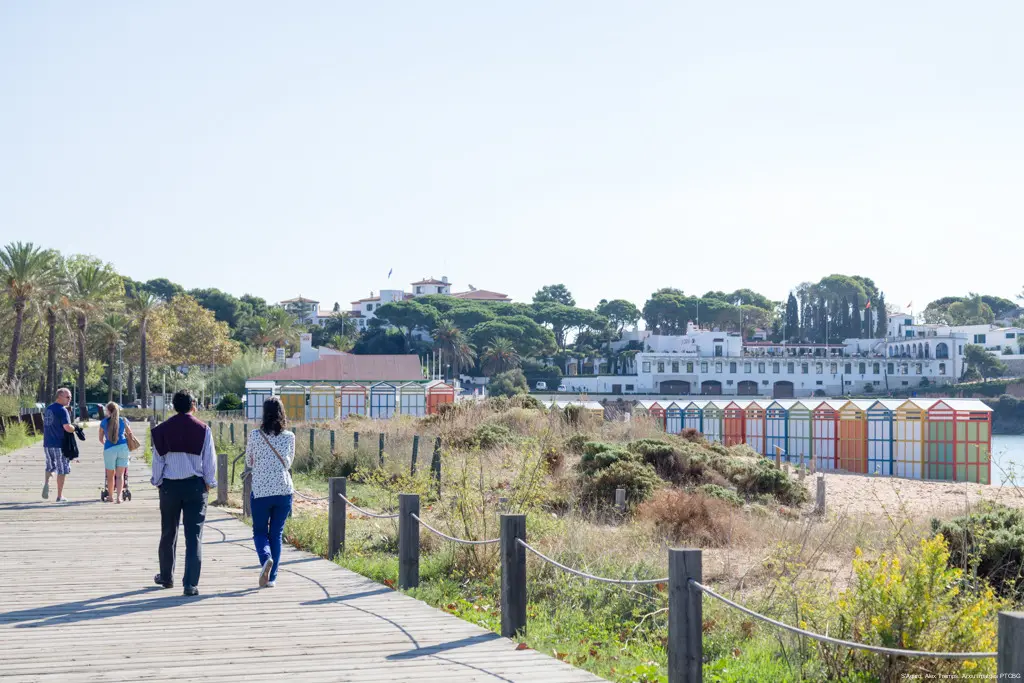
Moving to Spain from the UK in 2026 means moving as a third-country national: without a visa you can stay 90 days in any 180, and to live here you need a national visa first. For Brits moving to Spain without a Spanish job, the two main routes are the non-lucrative visa, which asks for €2,400 a month for the applicant plus €600 for each family member in 2026, and the digital nomad visa, which asks for €2,442 a month plus €916 for the first family member. The golden visa closed on 3 April 2025. Once you arrive, you apply for your residence card (TIE) in person within one month and register on the padrón at the town hall.
Take a retired couple from Manchester planning to live on savings and a private pension. On the non-lucrative visa, the main applicant shows €2,400 a month and the spouse €600, so the household needs €3,000 a month, or €36,000 a year (this is an example built from the 2026 figures, not a personal assessment). They apply through the visa centre in London up to 90 days before they travel. After landing they have a month to book the TIE appointment, and they'll need to sort healthcare and the padrón in the same weeks.
None of these steps is hard on its own. The difficulty is the order and the deadlines. Below we go through the routes, the paperwork after arrival, healthcare, driving, tax and the first costs to expect. We work in Girona province on the Costa Brava, so local examples come from here.
How do I move to Spain from the UK after Brexit?
Since Brexit, UK citizens are treated like any other non-EU nationals. That has consequences for anyone emigrating to Spain.
Short stays are capped. Visiting without a visa, you can spend 90 days in any rolling 180-day period in the Schengen area, not just in Spain. A house-hunting trip, a summer and a few weeks at Christmas can add up to more than you'd think.
Living here needs a visa issued before you go. You choose the visa that matches your situation (savings or pension, remote work, a Spanish job, your own business), apply in the UK and enter Spain with it. You then apply for the residence card here.
If you already lived in Spain before 1 January 2021, you're covered by the Withdrawal Agreement: your rights are protected, your TIE is marked "Artículo 50 TUE", and if you still hold the old green certificate, it's worth exchanging it for a TIE.
The EES border check and ETIAS
The EU Entry/Exit System (EES) started on 12 October 2025 and has been fully running since 10 April 2026 at the external borders of 29 European countries. Instead of a passport stamp, your fingerprints and a facial image are recorded digitally, and the system counts your days against the 90/180 limit.
Holders of a long-stay visa or a residence permit are not registered in EES. For British residents of Spain, that means the TIE: the old green residence certificate doesn't count for this. If you live here and still travel on the green certificate, this is one more reason to swap it.
ETIAS, the travel authorisation for visa-free visitors, is not running yet and no start date has been set. The European Commission says it will announce the date several months in advance. Anything you read with a firm ETIAS date is a guess.
Visas for moving to Spain from the UK in 2026
Spain's national visas for living here are separate from the 90-day rule. These are the main ones, with the 2026 figures.
| Route | Who it suits | Income needed, 2026 | Can you work? |
|---|---|---|---|
| Non-lucrative visa | Retirees and people living on savings, pensions or investments | 400% of IPREM: €2,400 a month, plus 100% (€600 a month) per family member | No |
| Digital nomad visa | Remote employees and freelancers working for clients outside Spain | 200% of the minimum wage: €2,442 a month; €916 for the first family member, €306 for each further one | Yes, remotely, under the visa's conditions |
| Work visas | A job with a Spanish employer, self-employment, highly qualified roles, entrepreneurs | Depends on the visa type | Yes |
| Golden visa | No longer available | Closed on 3 April 2025 (Ley Orgánica 1/2025) | Not applicable |
The non-lucrative visa. The income rule is set as a percentage of IPREM, a Spanish reference index that is €600 a month in 2026 (€7,200 a year in 12 payments). You also need public or private health insurance authorised in Spain that covers everything the public system covers. You cannot work on this visa. Our non-lucrative visa guide goes through the documents in detail.
The digital nomad visa. The threshold is tied to Spain's minimum wage (SMI), which is €1,221 a month in 14 payments in 2026, or €17,094 a year. A couple on this visa needs €2,442 plus €916, so €3,358 a month; with one child, another €306.
Work visas. Employment, self-employment, highly qualified professional and entrepreneur visas each have their own national visa and their own requirements. Check the exact list for your case with the consulate.
The golden visa. Spain ended residence through investment with Ley Orgánica 1/2025, from 3 April 2025. Applications filed before that date are still processed under the old rules. Buying property no longer gives you residence by itself. We look at the alternatives in our article on life after the golden visa.
Where to apply in the UK
Visa applications go through BLS, the visa centre working for the Spanish consulates. If you live in England or Wales, you apply at BLS London, 20 St Andrew Street, London EC4A 3AG. If you live in Scotland or Northern Ireland, you apply at BLS Edinburgh, 6 Dock Place. You can apply for the non-lucrative visa up to 90 days before you enter Spain.
Fees are charged by the consulate and by BLS, and they change. Check the current checklist on the consulate's website before you book, rather than relying on figures from older articles, ours included.
After you arrive: TIE, NIE and padrón
The first weeks in Spain are about three documents. Here is what each one is and when you need it.
- TIE (Tarjeta de Identidad de Extranjero). Your residence card. You apply for it in person within one month of entering Spain. The fee for a first TIE is €16.08. In Girona province, the police issue TIE cards; appointments are booked online on the government's appointment system.
- NIE (Número de Identidad de Extranjero). Your foreigner's identification number, used for tax and for buying property. If you need it before you move, for example to buy a home first, you can request it on form EX-15 with a fee of €9.84, at a police office in Spain or through a consulate abroad. More in our NIE guide.
- Padrón. Everyone who lives in Spain registers on the municipal register (padrón) at the town hall where they live. Many offices ask for a padrón certificate no older than three months, so you may need to request a fresh one for later procedures. In Blanes, for example, registration is free and done in person by appointment at the OAC AMIC office, Passeig de Dintre 29.
Residence permits as such are handled in Girona by the Oficina de Extranjería on Avinguda Jaume I, 17. The police handle cards and numbers. Knowing which office does what saves a wasted morning.
Healthcare when you move to Spain from the UK
How you're covered depends on why you're here.
UK State Pension. If you receive the UK State Pension, you can get an S1 form from the UK and register it with the INSS, Spain's social security institute. That gives you access to Spanish public healthcare. With an S1 you can't join the convenio especial.
Convenio especial. This is the pay-in scheme for public healthcare for people without another right to it. It's only open after one year of residence. Until then, you need private insurance.
Working in Spain. If you work here and pay Spanish social security, you're covered through it.
Your local health card. In Catalonia the health card is the CatSalut TSI, and you need to be on the padrón in Catalonia to get it. Our health insurance guide for foreigners compares public and private cover.
Retire to Spain from the UK: what changes
For retirees, the route is usually the non-lucrative visa, healthcare through the S1 once you draw the UK State Pension, and a decision on where your pension is taxed. We cover those three in depth, with the Costa Brava towns compared, in Retire to Spain in 2026. The rest of this guide applies to retirees in the same way.
Driving: your UK licence
A UK licence is valid in Spain for six months from the date you become normally resident. After that you exchange it for a Spanish one under the UK-Spain agreement on driving licences (BOE-A-2023-8050). The exchange is done through the DGT, Spain's traffic authority. If you plan to drive from day one, put a reminder in your calendar for month five.
Tax: when you become a Spanish tax resident
Spanish tax residence is decided by article 9 of the income tax law (LIRPF). You're resident if you spend more than 183 days in Spain in a calendar year, or if the main centre of your economic interests is here. If your spouse and minor children live in Spain, the tax office presumes you're resident too.
The UK and Spain have a double taxation treaty in force, so the same income is not taxed twice in full. Which country taxes which income (pensions, rent, dividends) depends on the type of income, and that is a question for a tax adviser who knows both systems.
Modelo 720. Once resident, you file an informative return on assets abroad if any category (accounts, securities, property) is worth more than €50,000. After the EU Court of Justice ruling in case C-788/19 (27 January 2022), Ley 5/2022 removed the special penalties that made the form notorious. The form itself remains.
Beckham regime. People who move to Spain to work can, under conditions, opt for article 93 of the LIRPF: a flat 24% on employment income up to €600,000. Since 2023 it's also open to remote workers and entrepreneurs. Check eligibility before you move, with a tax adviser in Spain.
Cost of living in Spain: what the official data says
Prices in Spain have been rising. Consumer prices were up 4.9% year on year in October 2026 (INE flash estimate), with core inflation at 3.1%. In Catalonia, the regional figure is +4.5% for September 2026, core 3.0% (Idescat). There is no official cost-of-living index for Girona or for individual Costa Brava towns, so be careful with websites that give one.
For a household budget, the useful numbers are rent, utilities, food and private health insurance in the town you're considering. We keep those for one town, with sources, in our guide to the cost of living in Lloret de Mar.
Rent first or buy?
Renting for the first months gives you an address for the padrón and time to learn the towns in winter as well as summer. Buying before you move needs an NIE but no residence. Both work. The trade-offs are in our guide rent or buy before moving to the Costa Brava.
Our view
The usual trap is timing. A visa approved, a flight booked, and then the month for the TIE runs out because no appointment was free, or the private insurance doesn't match what the consulate asked for. Plan the first eight weeks on paper before you give notice on your UK home.
Three practical rules
1. Pick the visa that fits your income, then check it on the consulate's site. Savings and pensions point to the non-lucrative visa, remote work to the digital nomad visa, a Spanish job to a work visa. The thresholds above are for 2026; confirm the document list for your case before you apply.
2. Book the TIE appointment as soon as you land. You have one month. Have your address ready for the padrón, because many later procedures ask for a recent padrón certificate.
3. Sort healthcare and tax before the 183rd day. Private insurance until you qualify for public cover, the S1 if you draw the UK State Pension, and a word with a tax adviser before your first Spanish tax year closes.
Questions people ask
How do I move to Spain from the UK in 2026?
Apply in the UK for the national visa that fits you (non-lucrative, digital nomad or a work visa) at BLS London or BLS Edinburgh, enter Spain with it, apply for your TIE residence card in person within one month and register on the padrón at your town hall. Without a visa, UK citizens can only stay 90 days in any 180 in the Schengen area.
How much money do I need to move to Spain from the UK?
For the non-lucrative visa in 2026, €2,400 a month for the applicant plus €600 a month for each family member (400% and 100% of IPREM, which is €600 a month). A couple therefore needs €3,000 a month. For the digital nomad visa, €2,442 a month for the applicant, €916 for the first family member and €306 for each further one.
Can I still get a golden visa in Spain?
No. Spain ended the golden visa with Ley Orgánica 1/2025, from 3 April 2025. Applications filed before that date are processed under the old rules. Buying property no longer gives residence on its own.
Can I use my UK driving licence in Spain?
Yes, for six months from the date you become normally resident in Spain. After that you need to exchange it for a Spanish licence through the DGT under the UK-Spain agreement.
When do I become a tax resident in Spain?
When you spend more than 183 days in Spain in a calendar year, or when your main economic interests are in Spain. If your spouse and minor children live in Spain, you are presumed resident. The UK-Spain double taxation treaty decides which country taxes each type of income.
Do I need ETIAS to visit Spain from the UK?
Not yet. ETIAS is not running and no start date has been announced; the European Commission says it will give several months' notice. The EES border system, which records fingerprints and a facial image instead of stamping passports, has been fully running since 10 April 2026.
Planning a move to the Costa Brava?
Tell us your budget, what kind of home you have in mind and which towns appeal to you. With that, we'll suggest homes in Girona province that fit your plans, and show them to you in person or by video call.
 Author: @katy.bon.estate, property consultant on the Costa Brava
Sources: European Commission, EES launch, EES fully operational and smart borders and ETIAS; gov.uk, Living in Spain, registering as a resident and getting a TIE and Healthcare in Spain; Spanish Consulate General in London and in Edinburgh; Ministerio de Inclusión (non-lucrative visa, Real Decreto 1155/2024); SEPE (IPREM 2026); Real Decreto 126/2026 (minimum wage 2026); La Moncloa (Ley Orgánica 1/2025, end of the golden visa); Ministerio del Interior and Policía Nacional (TIE, NIE, fees); Ministerio de Política Territorial y Memoria Democrática (Oficina de Extranjería, Girona); Ajuntament de Blanes (padrón); CatSalut (TSI); DGT (UK licences, BOE-A-2023-8050); Agencia Tributaria (tax residence, Modelo 720, article 93 LIRPF); INE (CPI, October 2026); Idescat (CPI Catalonia, September 2026). Cover: S'Agaró, Castell-Platja d'Aro. Photo: Alex Tremps. Arxiu d'Imatges PTCBG, 27064. Information as of 12 November 2026. This is general information, not legal or tax advice: check your case with a lawyer in Spain.